
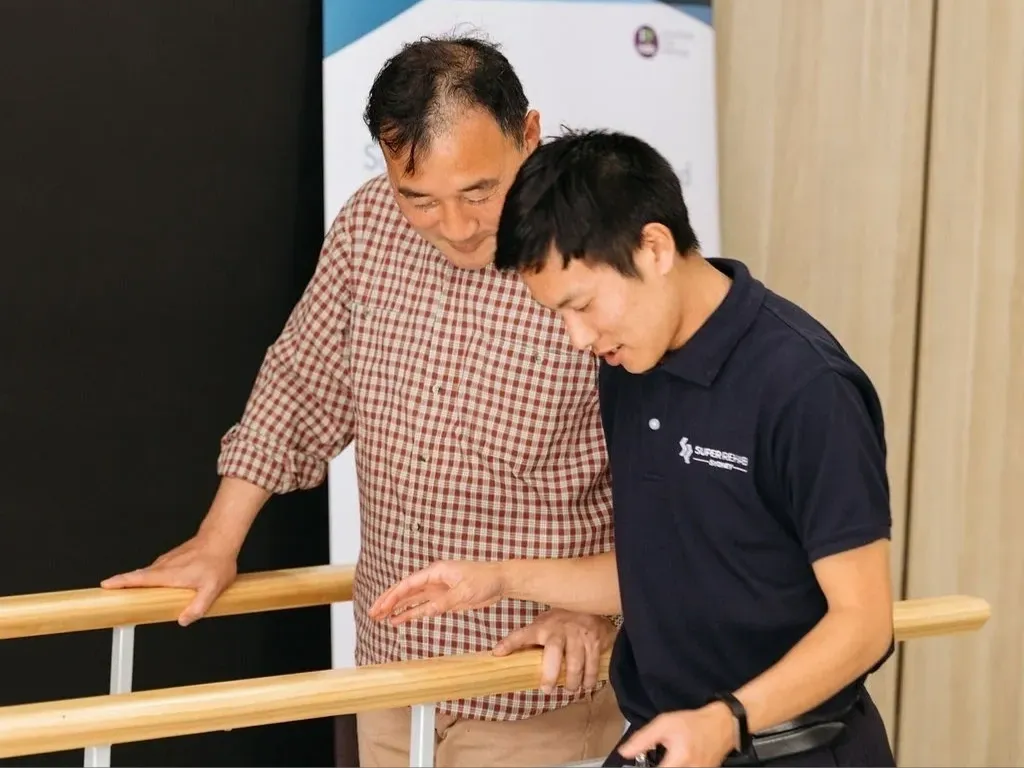
At Super Rehab, our Physiotherapists (PTs) and Exercise Physiologists (EPs) work closely together to provide the best quality services for our participants. While each profession has its own scope of practice, there are times when their roles overlap — particularly in the community setting. This guide is designed to help you understand the key differences and make more confident referral decisions.
What do PT and EP have in common?
Both PTs and EPs are university-qualified allied health professionals trained in the management of a wide range of conditions including heart disease, diabetes, cognitive decline, osteoporosis, osteoarthritis, falls risk, and back pain.
In the community setting, both professions use exercise as a primary form of treatment to help participants achieve their goals — whether that is improving strength, balance, and mobility, or reducing the risk of falls.
Both PT and EP can support participants with the following:
- Exercise prescription and home programs for strengthening, balance, mobility, and fitness
- Replacement of an existing walking aid
- Recommendations on exercise equipment
Both PT and EP also commonly work with participants experiencing:
- Chronic diseases such as COPD
- Post-surgical rehabilitation
- Deconditioning following a fall
- Neurological conditions such as Parkinson’s Disease, MS, and stroke
- Chronic pain
Where do they differ?
Exercise Physiology
EPs use exercise and movement prescription as their primary form of intervention. They work with people who are generally healthy as well as those living with chronic conditions or disability. Their focus is on long-term health improvement, fitness, weight management, and the ongoing management of chronic disease through structured exercise programs.
Refer to EP when the participant’s primary goal is fitness improvement, weight management, or long-term chronic condition management through exercise alone — and where hands-on manual therapy or acute injury assessment is not required.
Physiotherapy
PTs can assess, diagnose, and treat a wide range of acute and chronic conditions and injuries, including musculoskeletal, neurological, and respiratory impairments. They use physical methods such as manual muscle and joint techniques alongside exercise prescription to treat physical conditions and injuries.
Refer to PT when the participant requires hands-on manual therapy, has an acute or complex injury or condition requiring diagnosis and clinical treatment, or needs a new mobility aid prescribed for the first time.
Quick reference guide
| Situation | Refer to |
|---|---|
| Participant needs a structured exercise program for strength, balance, or mobility | PT or EP |
| Participant’s primary goal is fitness improvement or weight loss | EP |
| Participant has a chronic condition managed primarily through exercise | PT or EP |
| Participant needs manual therapy alongside exercise | PT |
| Participant has an acute injury or musculoskeletal condition requiring diagnosis | PT |
| Participant needs a new mobility aid prescribed | PT |
| Participant needs a replacement of an existing walking aid | PT or EP |
| Participant only wants massage | Neither — refer to a massage therapist |
Still not sure who to refer to?
Our referral allocation guide covers a wider range of scenarios across all disciplines including Occupational Therapy, Speech Pathology, and Dietetics. You can also call our team directly — we are happy to help you identify the right clinician before you submit a referral.
📞 (02) 8970 4632
✉ info@superrehab.com.au
🌐 superrehab.com.au/referral-guide