
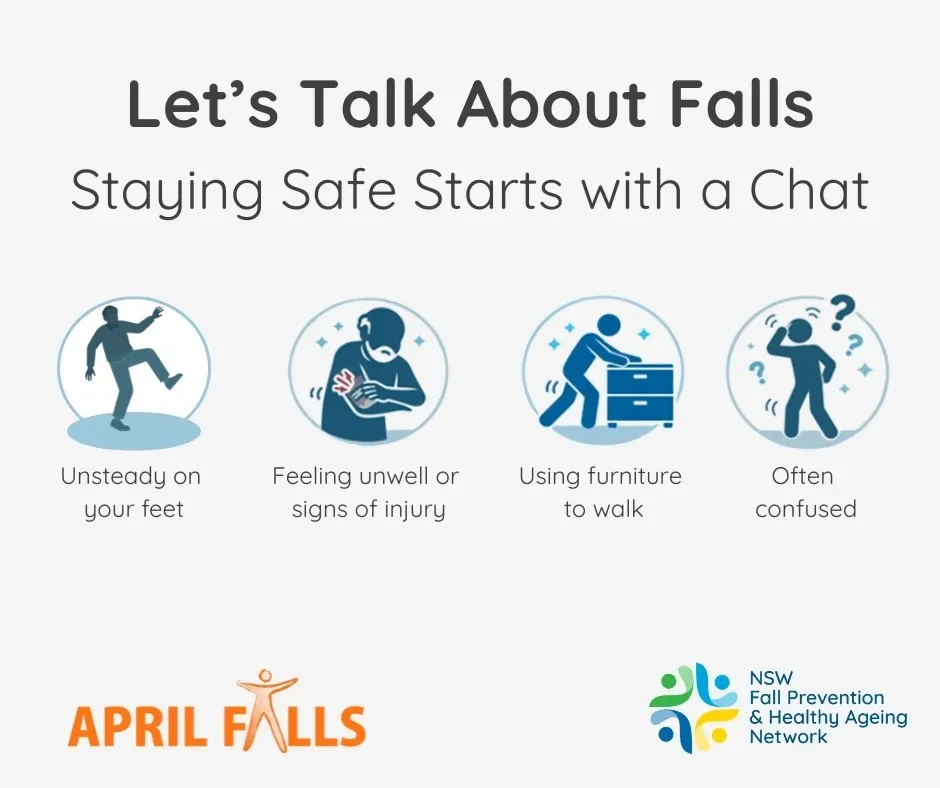
April marks Falls Prevention Month, led by NSW Fall Prevention and Healthy Ageing Network. The campaign highlights a simple but critical message:
Falls do not just happen. They build up over time.
In community and aged care settings, the warning signs are often present well before a fall occurs. The challenge is not identifying risk. The challenge is acting early enough.
👉 The scale of the problem
Falls remain one of the leading causes of injury for older Australians. In New South Wales:
- Around 30% of people over 65 experience a fall each year
- Falls account for 37% of injury-related deaths
- Regular exercise can reduce falls by up to 23%
These numbers highlight a key point. Falls are common, but they are also largely preventable.
👉 Falls are rarely sudden events
In most cases, a fall is the result of gradual changes in function. You may notice:
- Increasing unsteadiness
- Slower or shuffling walking
- Holding onto furniture for support
- Reduced confidence in mobility
- Unexplained bruising or near misses
These are not minor changes. They are early indicators of increased risk. The common mistake is to monitor these signs rather than act on them.
👉 Why early intervention is critical
Waiting until a fall occurs often leads to:
- Hospitalisation
- Loss of independence
- Reduced confidence and activity
- Increased care needs
Early intervention changes this trajectory. When support is introduced early, it can:
- Improve strength and balance
- Address environmental risks
- Support safer movement at home
- Maintain independence for longer
👉What actually prevents falls
There is no single solution to falls prevention. Effective intervention requires a multifactorial approach.
1. Strength and balance training
Delivered by Physiotherapists or Exercise Physiologists, targeted programs improve stability, coordination, and confidence.
2. Home environment assessment
Occupational Therapists assess the home for hazards such as poor lighting, unsafe bathroom setups, and clutter, and recommend practical modifications.
3. Assistive technology and equipment
Appropriate mobility aids and equipment can significantly reduce risk when prescribed and used correctly.
4. Education and support
Care staff and families play a key role in recognising early signs and supporting safe daily routines.
👉Where opportunities are often missed
In practice, we often see:
- Referrals made only after a fall has occurred
- Early signs documented but not escalated
- Falls treated as isolated incidents rather than preventable risks
This delay reduces the effectiveness of intervention. The most effective point to act is before the first fall.
👉 A simple rule for care teams
To support decision-making, we recommend a simple approach:
- 1 sign = take action
- 2 or more signs = priority referral
If there is uncertainty, it is safer to refer early.
👉 How Super Rehab supports falls prevention
At Super Rehab, we provide home-based allied health services designed to support early intervention and ongoing risk management.
Our team supports participants through:
- Falls risk screening and assessment
- Physiotherapy and Exercise Physiology programs
- Occupational Therapy home safety assessments
- Assistive Technology and Home Modifications (AT-HM)
- Education for care staff and families
All services are delivered in line with Support at Home principles, focusing on independence, safety, and reablement.
👉 What you can do this April
Falls Prevention Month is an opportunity to shift from awareness to action.
If you are working with participants who:
- Are becoming unsteady
- Have had a recent near fall or fall
- Show reduced confidence in mobility
- Require a support plan review
Now is the time to act.
👉 Take the next step
Early referral leads to better outcomes.
📋 Submit a referral: https://superrehab.com.au/general-referral
📩 Discuss a case with our team to determine the most appropriate support